
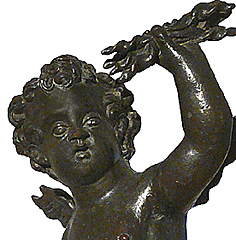
„Woah! Careful there! I’haven’t quite got the hang of these things. There’re thunderbolts so you need to watch out! I might let one loose by mistake! Normally I’m blindfolded and shoot arrows with my bow. When by chance an arrow hits someone, they fall in love and so, in case you haven’t worked it out, I’m Amour, better known as Cupid. Today I thought I would have a change and removed my blindfold, only to find that instead of having arrows in my quiver, I now have bolts of lightening! Seriously awesome. I’m sill trying to work out what’s what. Some scorch fields, others take the roofs off church towers and some make people cry Eureka! and run about excitedly. Which reminds me, I’m supposed to telling you about some legal guff that Zeus thinks is important. He says that although its love that makes to world go round, laws, contracts and money are necessary in order to ensure that when love, humility and honesty are ignored, things still work. So there you go – a silly, double-protection idea that resulted in me spending years locked up in the storeroom at Museum Krems. But I’m out now and with these handy bolts who knows what cannot be done! In the meantime though, whilst I work out which bolt does what, here’s a handout out for you. Then when I’m finished, we can wreak some havoc and give the world a shake-up!“
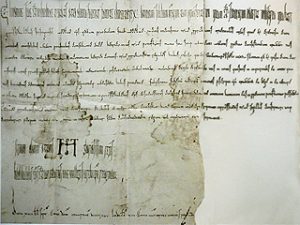
Krems or „Chremsa“ is first mentioned in a document written in 996, when Holy Roman Emperor Otto III ordained that the uninhabited area between Melk and Krems should be settled and colonized by monasteries in Germany. Exactly two hundred years later, the town had become a regional capital and was made a legal seat of administration with a court of law where cases were heard, verdicts pronounced and sentences passed. As death sentences were passed and members of the aristocracy and clergymen who had committed severe crimes were executed with a sword (as opposed to being hung), the judge carried a ceremonial sword.
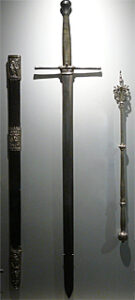
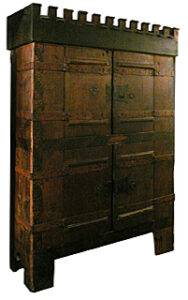
In addition to a sword, the judge also carried a scepter. This derives from the Greek words skeptomai, which means to see, visually investigate or examine, and skepao, which means to protect. In the scepters carried by kings and administrative officials, both meaning of the words are invoked the object’s symbolic function. Meanwhile the documents of cases heard and sentences passed, were kept in the cupboard shown below. Like the judge’s sword and scepter, the cupboard can be seen free of charge in Room 1 of Museum Krems.
With respect to legalities, the current status of Reloading Humanism is that of an initiative that expresses the opinions of a private individual. Thus it is not money that drives Reloading Humanism but love, a sense of duty and a ruthless determination to fight for a better world.